

As businesses grow, so do the demands placed on their premises and facilities. More employees, changing ways of working and evolving operational requirements can all leave a building feeling outdated, inefficient or no longer fit for purpose.
At this stage, many organisations begin asking the same question: is it better to renovate the current premises or relocate to a new site?
While budget is often the starting point, assessing the true cost and impact requires a much broader view. Business disruption, operational efficiency, employee productivity, future flexibility and long-term return on investment should all influence which option offers the greatest value.
Before making a decision, it is worth taking a step back and assessing the full picture.
Start by Identifying What Is No Longer Working
The first step is not comparing properties or obtaining quotations. It is understanding why your current premises and facilities no longer meet the needs of your organisation.
Consider questions such as:
- Has your business outgrown the available space?
- Is the current layout affecting productivity or operational efficiency?
- Are important working, meeting, storage or collaborative areas lacking?
- Do the premises still reflect your business and brand?
- Are employees struggling with outdated facilities?
- Are there accessibility, compliance or health and safety issues to address?
- Could new ways of working change your overall space requirements?
Businesses often discover that they do not necessarily need more space. Instead, they need to use their existing premises more effectively.
A professional analysis and feasibility assessment, supported by intelligent space planning and design, can identify opportunities to improve capacity, efficiency and the working environment without requiring a move.
Calculate the Full Cost of Relocating
When comparing refurbishment with relocation, it is important to consider every cost involved, not simply the expense of securing new premises.
A relocation project may include:
- Dilapidation costs for your existing premises
- Legal fees and lease negotiations
- Surveys, planning and professional fees
- Removal and storage costs
- IT and communications infrastructure
- Machinery, equipment or furniture relocation
- Furniture replacement or reconfiguration
- New signage and branding
- Security and access systems
- Fit-out or refurbishment work at the new premises
- Staff downtime during the move
- Temporary disruption to business operations
These costs can substantially increase the overall investment. They need to be assessed alongside the potential benefits of the new location, including additional capacity, improved facilities and greater opportunities for future growth.
The price attached to a new lease or property is only one part of the calculation. The true cost of relocating business premises also includes the time, resources and operational disruption required to make the move successful.
Glenside’s relocation and consolidation services can support businesses through the practical requirements of moving, from planning and packing to coordinating furniture, equipment and transportation.
Could Your Existing Premises Work Harder?
One of the biggest misconceptions is that a growing business automatically needs larger premises.
In reality, many commercial buildings contain underused or poorly configured areas that can be transformed through intelligent planning and design.
Depending on the building and the organisation’s requirements, improvements could include:
- Reconfiguring departmental or operational layouts
- Creating flexible meeting and working spaces
- Introducing collaborative and breakout areas
- Improving storage and stock-management solutions
- Reorganising production, warehouse or back-of-house areas
- Adding mezzanine floors where appropriate
- Upgrading kitchens, washrooms and staff welfare facilities
- Improving access and movement throughout the building
- Designing spaces that support flexible or hybrid working
- Upgrading mechanical, electrical or energy systems
These changes can increase usable capacity, improve working conditions and make day-to-day operations more efficient without increasing the building’s footprint.
Before assuming relocation is necessary, it is worth exploring what could be achieved through a strategic commercial refurbishment of the existing premises.
Consider the Impact on Business Operations
Whether renovating or relocating, every project has the potential to affect day-to-day operations.
A well-planned commercial fit-out or refurbishment can minimise disruption through careful scheduling, phased works and clear communication. In some cases, work can be completed in stages or outside core operating hours, allowing parts of the premises to remain in use throughout the project.
If relocating, consider how the move may affect:
- Customer, visitor and supplier access
- Staff commuting times
- Operational downtime
- Equipment and machinery installation
- Deliveries and logistics
- IT and communications changeovers
- Business continuity
- Security and access arrangements
- Project timescales
These issues should be considered early in the planning process. A lower initial project cost may offer limited value if the work results in extended downtime, lost productivity or disruption to customers.
Understanding how each option will affect the organisation before, during and after the project makes it easier to develop a realistic budget and programme.
Assess the Suitability of the Location
The decision is not only about the building itself. Its location can also have a significant effect on the business.
When considering relocation, assess whether a potential new site offers:
- Suitable transport links and staff accessibility
- Convenient access for clients, suppliers and deliveries
- Enough parking or appropriate public transport options
- Proximity to customers, partners or skilled employees
- The necessary planning and operational permissions
- Reliable utilities and digital connectivity
- Space for future expansion
A new building may offer better facilities but create challenges for employees, customers or logistics. Equally, remaining in a familiar location may provide valuable continuity that would be difficult to replace.
The wider impact of a move should therefore be considered alongside the physical qualities and cost of the new premises.
Review the Condition of the Existing Building
The condition of your current premises will influence whether renovation represents a sound long-term investment.
A building that requires extensive structural repairs, major system upgrades or ongoing maintenance may be less cost-effective to retain. However, a property with a sound structure and a suitable location could provide an excellent foundation for refurbishment.
A feasibility study or building assessment can help identify:
- Structural or maintenance concerns
- The condition of mechanical and electrical systems
- Energy-efficiency opportunities
- Accessibility and compliance requirements
- Potential layout changes
- Opportunities to expand or add usable floor space
- Likely project costs and timescales
This evidence provides a clearer basis for comparing renovation with relocation and reduces the risk of unexpected costs emerging later.
Think About Employee and Customer Experience
Premises and facilities have a direct effect on the people who use them. An outdated, uncomfortable or poorly planned environment may affect employee satisfaction, productivity and retention. It can also shape how customers, visitors and potential recruits perceive the organisation.
When comparing renovation and relocation, consider whether each option could:
- Provide a safer and more comfortable environment
- Improve lighting, acoustics and air quality
- Support different types of work and operational activity
- Deliver better staff welfare facilities
- Make the premises more inclusive and accessible
- Strengthen the organisation’s brand and culture
- Create a better experience for customers and visitors
The right solution should not simply provide enough physical space. It should create an environment that helps people perform effectively and presents the business in the right way.
Consider Sustainability and Running Costs
Energy performance and operating costs are becoming increasingly important when assessing commercial premises.
Older buildings may be more expensive to heat, cool, light and maintain, but refurbishment can create opportunities to improve their performance.
Upgrades might include more efficient lighting, heating and ventilation systems, improved insulation, better controls and the use of durable, sustainable materials.
A new site may already provide some of these benefits, although its performance should still be assessed carefully rather than assumed.
When comparing the options, consider current and projected energy costs, maintenance requirements, opportunities to improve efficiency and the expected lifespan of any new finishes, fixtures and systems. Looking beyond the initial project cost can reveal where the strongest long-term value lies.
Think About the Long-Term Return on Investment
Rather than focusing solely on today’s costs, consider how your premises and facilities will perform over the next five to ten years.
Questions worth asking include:
- Will the premises support future business growth?
- Can the layout adapt as teams and operations change?
- Will the project improve employee wellbeing and retention?
- Does it create a better experience for customers and visitors?
- Could improved energy efficiency reduce running costs?
- Will upgraded facilities improve operational performance?
- Can the building accommodate future equipment or technology?
- Will the work reduce the need for further alterations?
- Could the investment increase the value or marketability of the property?
The lowest-cost option is not always the one that delivers the best return. The most successful commercial refurbishment and relocation projects create ongoing value long after the work has been completed.
“We are delighted with the final result. The project from our initial meeting throughout to completion was hassle-free, to budget and on time. We would not hesitate to recommend Glenside.”
— Events & Operations Director, Media Company, Harrow
A Real Example of Strategic Premises Planning
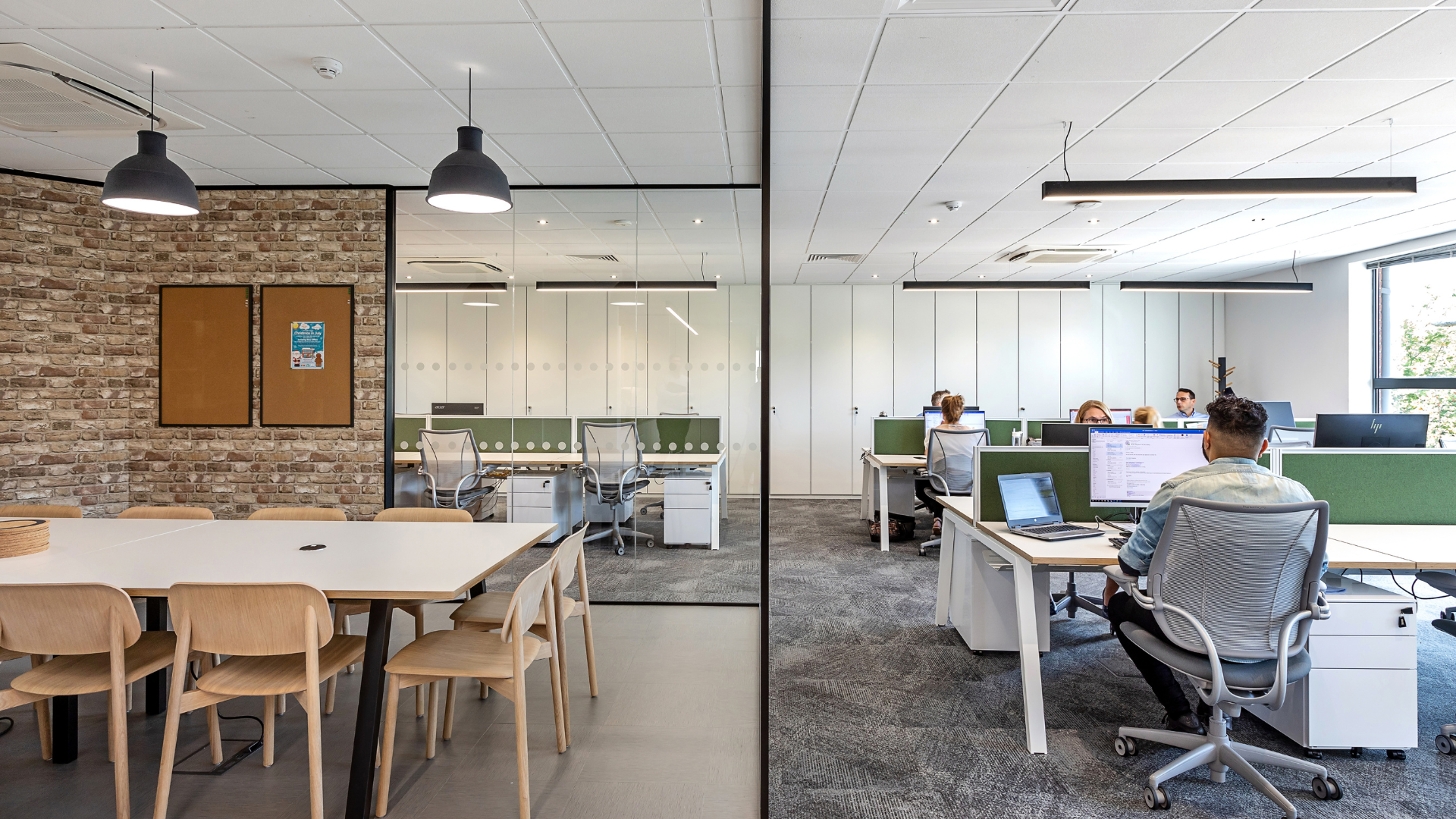
One of Glenside’s clients, a media company relocating to new premises in Harrow, wanted more than simply a new office. The objective was to create facilities that better reflected the business while supporting collaboration, employee wellbeing, efficient operations and future growth.
Working closely with the client, Glenside delivered a complete office fit-out within a seven-week programme. The new environment included meeting rooms, collaborative areas and breakout facilities, all tailored to the company’s day-to-day requirements.
The success of the project was not simply about moving from one building to another. It was about ensuring the new premises worked better for the business from the first day of occupation.
Read the full media company relocation and fit-out case study.
Renovation or Relocation? The Right Answer Depends on Your Business
There is no single answer that suits every organisation.
For some businesses, relocation provides the space, location and facilities needed for future expansion. For others, refurbishing existing premises delivers many of the same benefits while reducing disruption and making better use of existing assets.
The key is to compare both options using realistic project costs, operational requirements, programme implications and the building’s ability to support future growth.
At Glenside, we help organisations evaluate their options before major decisions are made. Through feasibility analysis, space planning, relocation support and commercial design and fit-out services, we help clients create premises and facilities that support current operations and long-term success.
Planning Your Next Commercial Property Project?
Whether you are considering renovating, refurbishing or relocating your premises, understanding the true cost and impact of each option is the first step towards making an informed decision.
Contact the Glenside team to discuss your plans or browse our recent commercial fit-out and refurbishment projects to see how we have helped organisations transform their premises.
View more insights: Office Design I Industrial Property I Laboratories I Wellbeing & Productivity I Company Updates
Join Our Mailing List
All data is handled inline with our Privacy Policy and you may unsubscribe at any time.